Curly Frizz
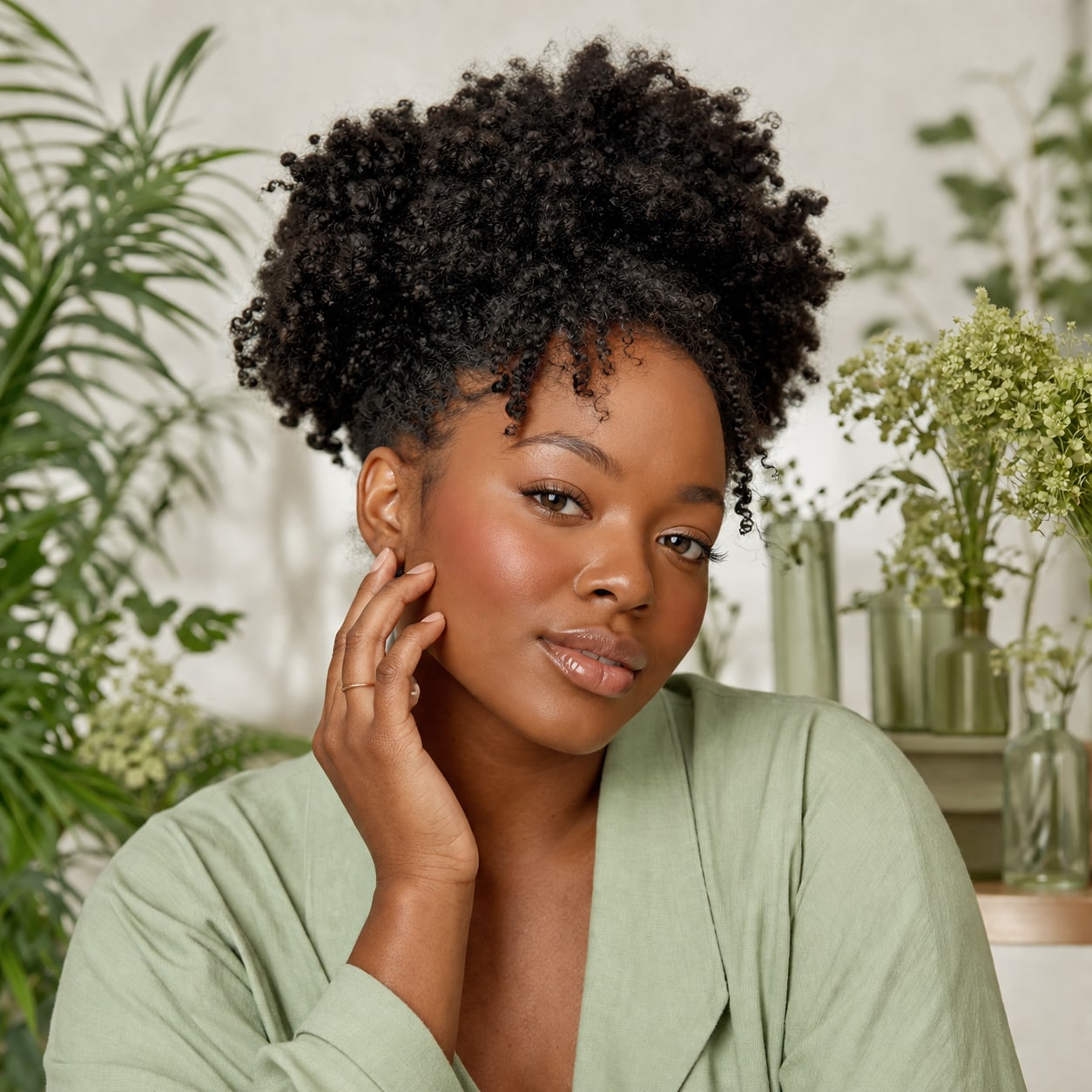
Coily Hair Frizz — 4A to 4C Moisture Guide
Manage shrinkage, dryness, and halo frizz on coily patterns with moisture-first cuticle care and gentle handling.
Frizzy Hair
Curly Frizz · Updated July 2026
Why curly and coily hair frizzes differently and how curl structure affects cuticle moisture exchange.
Frizz happens when cuticle scales lift and moisture moves through the strand unevenly—for curly hair, that mechanism intersects with geometry. Every bend along a curl increases exposed surface area and slows natural oil migration from scalp to ends. The result: drier mid-shaft, stress points where cuticles may sit slightly raised, and clumps that break apart into halo volume and stray strands.
You are not fighting your curl pattern. You are managing a high-surface-area structure in environments that constantly challenge cuticle smoothness.
Hair exits the follicle at an angle, creating waves, curls, or coils. At each curve:
When humidity rises, bent strands absorb water at multiple points simultaneously—definition collapses fast. When air is dry, the same bends lose moisture first—ends feel rough and puffy.
Science background: cuticle structure and hair porosity.
Curly hair experiences all frizz types:
| Cause | Curly presentation | Primary silo |
|---|---|---|
| Humidity | Clumps expand, root lift | Humidity |
| Dryness | Crunchy ends, less shine | Dry frizz |
| Damage | Stringy breaks, rough feel | Damage frizz |
| Technique | Flat roots, uneven pattern | How-to guides |
Identify your dominant trigger before changing products.
Moisture before hold — Dehydrated cuticles frizz regardless of gel strength.
Section application — Ensures every curve receives product.
Dry fully before touching — Friction breaks clumps and re-lifts cuticles.
Sleep protection — Pineapple, bonnet, or silk reduce overnight frizz; see overnight frizz protection.
Clarify periodically — Product buildup mimics frizz on low-porosity curls.
Plopping method — Enhances clump formation wet.
Diffuser technique — Speeds drying with less frizz than uncontrolled air dry.
Wash day frizz control — Full sequence from cleanse to seal.
Curly frizz is cuticle disruption amplified by strand geometry and uneven natural moisture distribution. Match routine to pattern, cause, and season; use section application and proper drying. This silo’s child articles cover wavy, coily, and definition maintenance in detail.
Frizz control improves when you treat each wash cycle as a controlled experiment rather than a new product hunt. Hold technique, timing, and dose constant for at least three cycles while changing only one variable—gel amount, dry method, or overnight protection. Note weather, indoor humidity if known, and how hair looked at four hours and end of day. Patterns emerge faster than switching bottles weekly.
Working routines show reduced styling time, fewer mid-day touch-ups, and frizz that stays localized (ends only) rather than global puff. If frizz shrinks but returns at the same time daily, check environmental triggers—commute humidity, gym showers, or office HVAC—before blaming product failure.
Persistent breakage, patchy hair loss, or sudden texture change after chemical service needs stylist or dermatologist input—not more anti-frizz serum. Trims every eight to twelve weeks remain part of maintenance even when routines stabilize; split ends cannot be sealed permanently at home.
Document hair at the same time of day under similar indoor lighting weekly. Compare photos before changing products again. Frizz improvement is often incremental—half-point reduction in daily touch-ups counts as success. Share notes with stylist so trims and chemical services align with your frizz cause profile.
Social media often recommends single-product miracles without cause context. If a creator has fine 2A hair, their humidity routine may fail on 3B high-porosity hair. Borrow techniques, not exact products, unless cause and texture match yours closely.
Manage shrinkage, dryness, and halo frizz on coily patterns with moisture-first cuticle care and gentle handling.

Keep curl clumps intact and frizz minimal from day two to day five with refresh methods that respect the cuticle.

Balance volume and definition on wavy hair without gel cast or heavy products that flatten your pattern.
Curves along the shaft increase surface area and create stress points where cuticles lift. Natural oils travel slower down bends, leaving mid-shaft and ends drier and more frizz-prone.
Related but distinct. Undefined curls often involve insufficient hold or moisture; frizz specifically involves lifted cuticles and stray strands breaking out of clumps.
No. Wavy hair needs lighter products; coily hair needs richer moisture and gentle handling. Pattern-specific guides in this silo cover 2A through 4C differences.
Yes. Many curlies face humidity puff in summer and dry frizz in winter. Seasonal routine swaps are normal.
See our humidity silo guide for curly hair, which pairs environmental mechanism with pattern-specific hold strategies.
Weekly frizz fixes — no spam.